
The Radical Visionary: Defining the Architecture of Bodywear (1978)
The evolution of modern apparel is marked by a singular pivot point: the transition from purely functional sportswear to high-fashion activewear. At the center of this revolution was Carushka Jarecka, who in 1978 established the technical and aesthetic foundation for what the world now knows as “Bodywear.”
Widely recognized for coining the term “Bodywear,” Carushka did not merely follow a trend—she engineered a movement. By conceptualizing the “Gym to Street” and “Athleisure” philosophies decades before they became industry standards, she transformed a niche category into a global multi-billion-dollar lifestyle.
The Foundation: Couture, Hawaii, and High Stakes:
Before she became a pioneer of the fitness movement, Carushka Jarecka was a master of high-fashion technicality. Her journey was defined by a rigorous academic foundation, earning her degree from the Fashion Institute of Design and Merchandising (FIDM) and a prestigious couture diploma from the Trippon School of Design. This precision was the “secret ingredient” that would later allow her to engineer garments that performed as well as they looked.
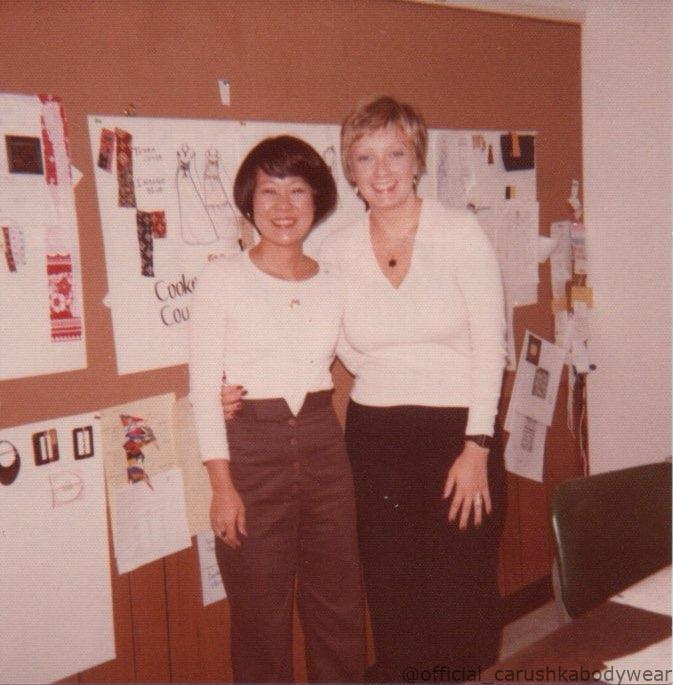
This expertise was immediately tested in the competitive world of Pacific couture. As the Head Designer for Tori Richard Ltd. in Honolulu, Carushka oversaw six entire divisions, winning the Royal Hibiscus Award and earning a Top 10 Designers nomination from the New York Fashion Group. It was here that she honed the architectural garment-building skills and executive leadership that would eventually allow her to build a $10 million empire from the ground up.
How It All Started: A $3,000 Disruption
In 1978, while the major apparel manufacturers ignored the growing demand for quality and performance, Carushka Jarecka took matters into her own hands. With a modest $3,000 investment and a radical vision, she launched her own label from the ground up. Mastering form-fitting silhouettes and intricate construction techniques, she transformed a small startup into a national standard-bearer for the burgeoning fitness industry.
Stars and Stripes: The Designs That Defined an Era

The spark of genius came from a simple observation. Carushka watched her sister struggle with uncomfortable, restrictive, polyester leotards. As a ballet dancer, she needed a couture solution to a functional problem. By introducing a superior Cotton/Lycra blend—a technical rarity at the time—and applying mitered stripes and necklines usually reserved for high-fashion ateliers, she solved the athlete’s dilemma.
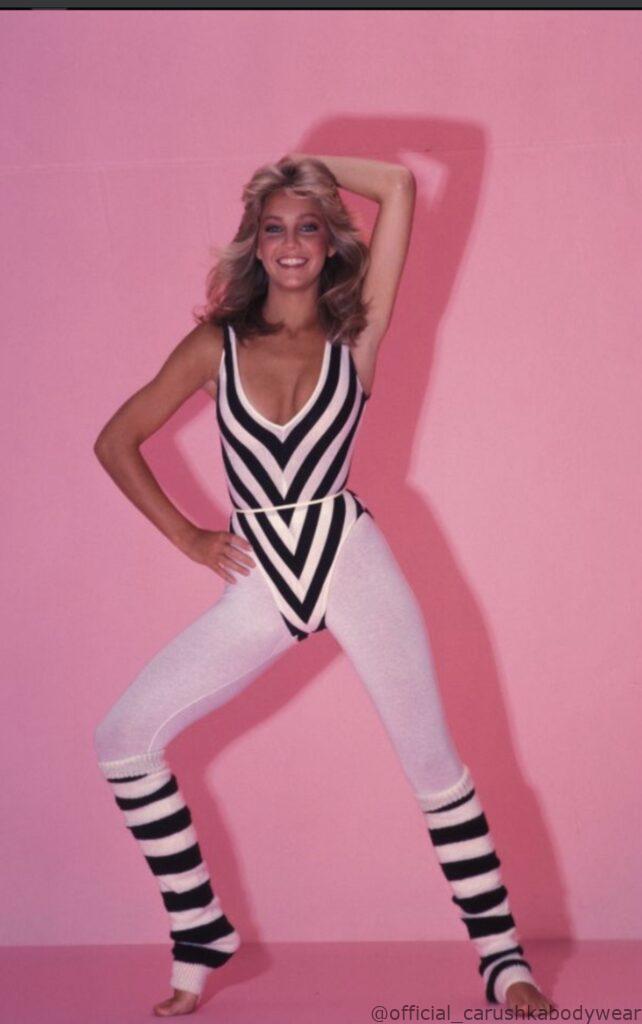
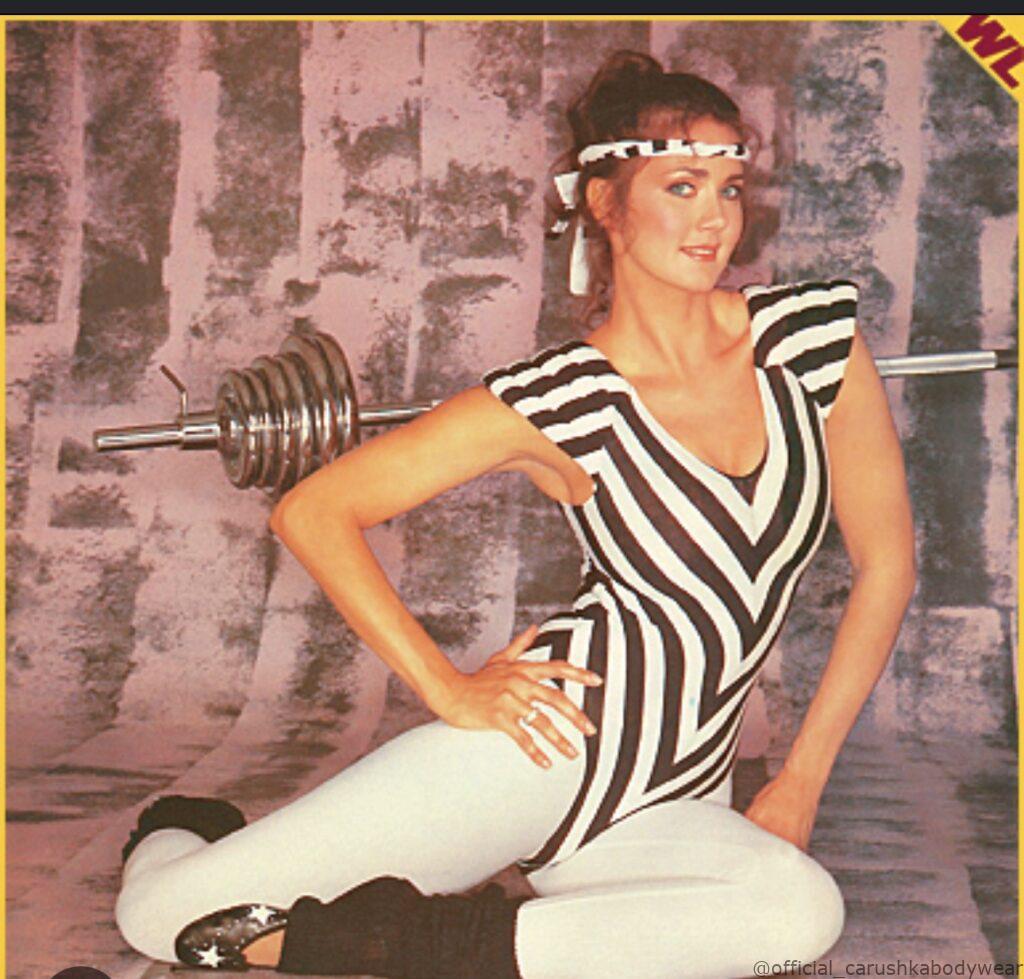
Her designs didn’t just fit; they moved. This perfect marriage of comfort and “mitered” precision became an overnight sensation. Soon, the iconic Carushka stripes were everywhere—defining the aesthetic of the 1980s aerobics craze on superstars including Jane Fonda, Heather Locklear, Lynda Carter, Olivia Newton-John, and Jamie Lee Curtis.
Staying Alive: Travolta by Carushka
Carushka’s technical mastery and show-stopping aesthetics eventually caught the eye of Hollywood’s elite. In 1982, she entered a high-profile creative partnership with John Travolta, tasked with designing the entire cinematic wardrobe for the 1983 film Staying Alive. This wasn’t just costume design; it was the creation of a visual movement that merged the grit of the rehearsal studio with the glamour of the big screen.
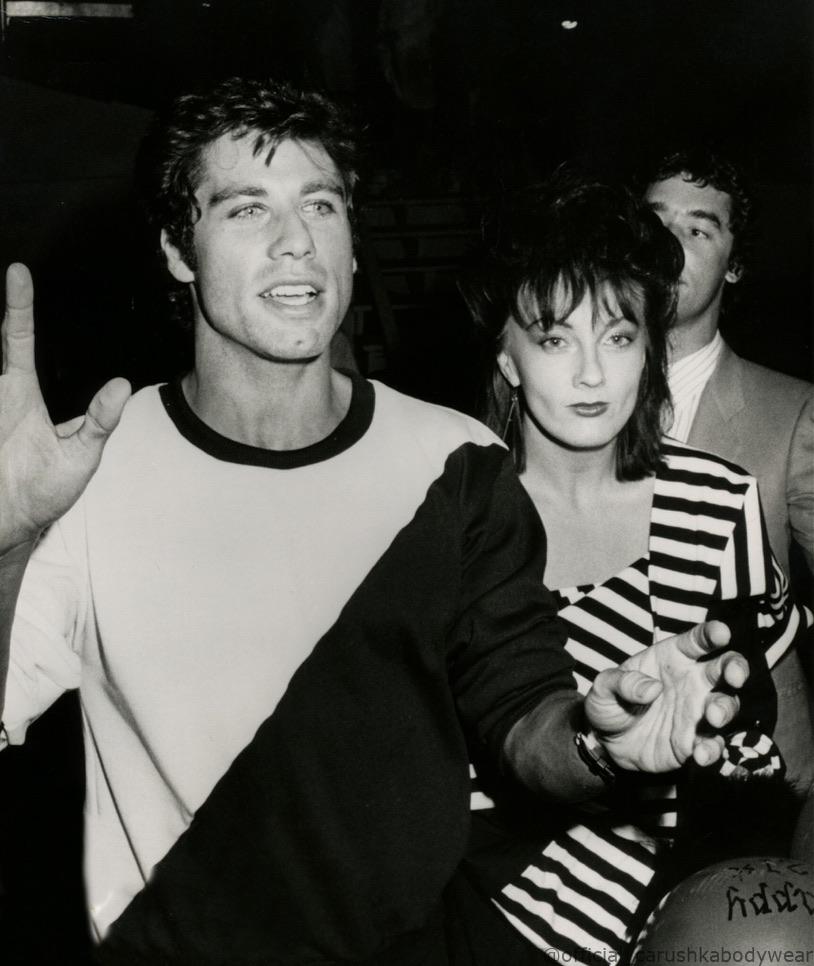
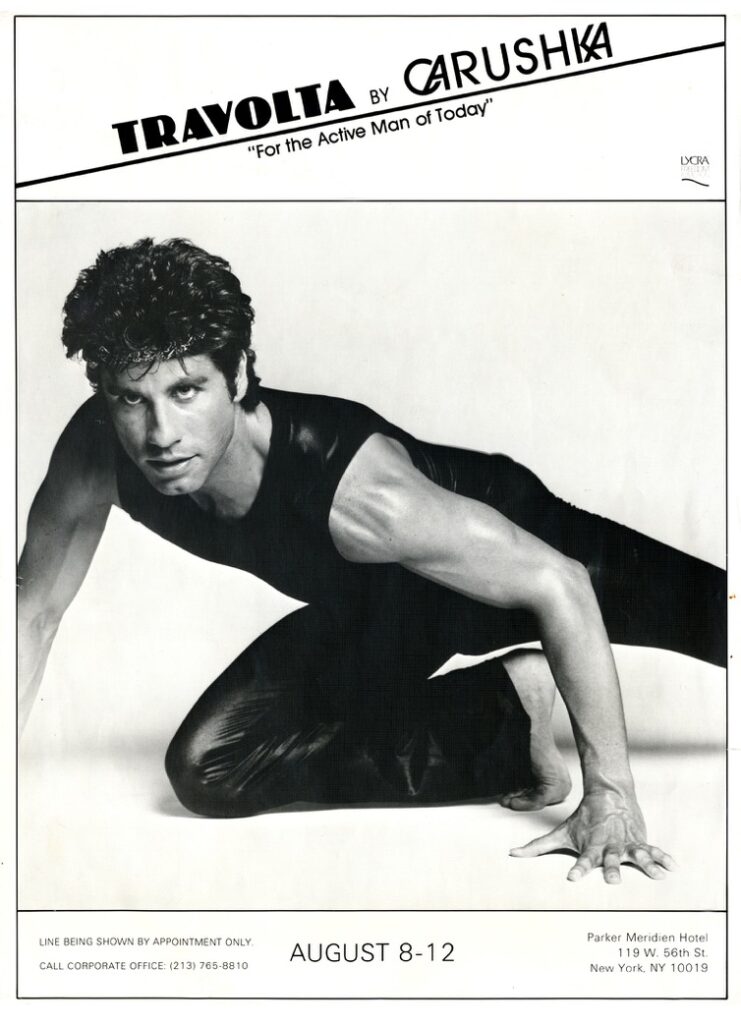
The collaboration was so successful it launched a dedicated menswear line under the Travolta by Carushka label, proving that her “body-conscious” philosophy was universal. By dressing the most famous leading man in the world, Carushka solidified her position as the premier designer of the 1980s fitness aesthetic—capturing a moment in time that still resonates in fashion today.
Orgins of Athleisure: From Dance Studios to the Global Zeitgeist
While the fashion industry only formalized the term “Athleisure” in the 2010s, Carushka Jarecka was the primary architect of the “Gym-to-Street” philosophy as early as 1978. Often cited as the “Architect of Movement” (Daily News, 1987), she engineered technical apparel that bridged the gap between performance and high fashion.
Her influence was cemented in the August 19, 1990, edition of The New York Times, which identified her as a pioneer of the movement in the feature article “Competitive Dressing.” Her original silhouettes didn’t just look great and fit well—they defined the cultural zeitgeist of the ’80s, ’90s, and 2000s.
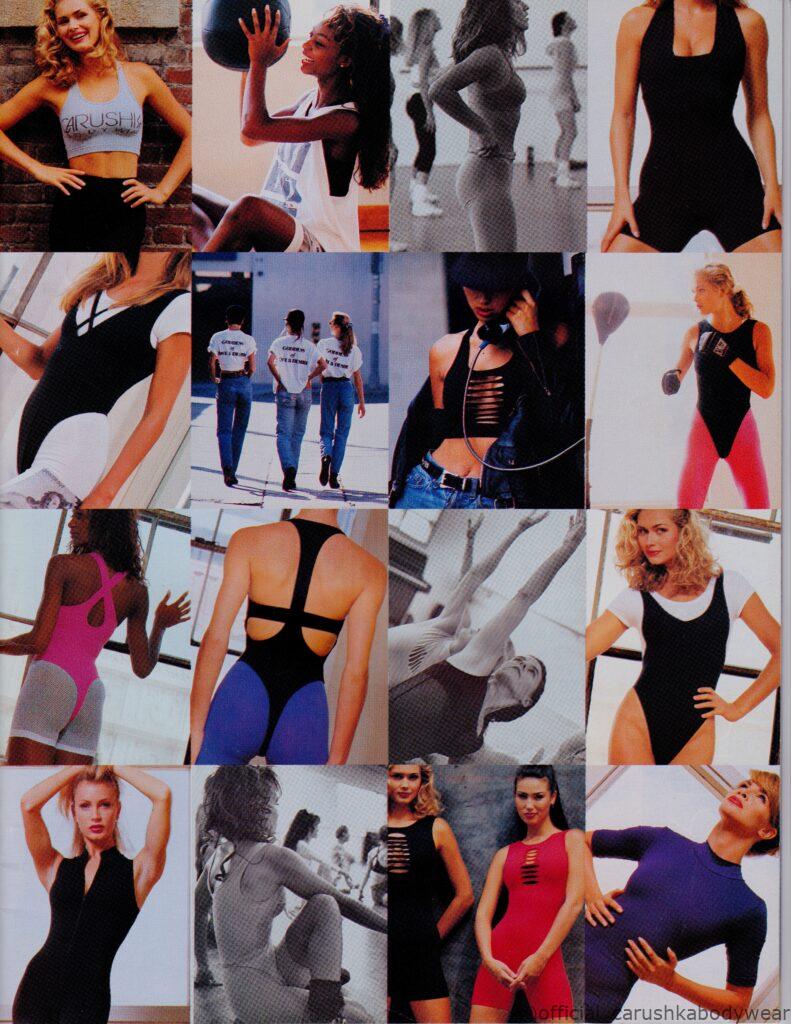
“The gym-to-street look, pioneered by designers like Carushka, has moved from the aerobics studio to the center of the fashion stage.” — The New York Times, August 19, 1990
The Original Influencer: “Expect the Unexpected”
At a time when corporate America hid behind logos and boards of directors, Carushka became the first true “Influencer” of the fitness world. She humanized commerce by putting a face to the brand, using her catalogs to share personal stories and featuring real customers to embark on a journey of connection and empowerment. This revolutionary model of direct-to-human marketing led to her business being immortalized as a primary case study in the Boone & Kurtz Contemporary Marketing textbooks.
- The Ultimate Recognition: Her influence culminated in being named a “Glamour Woman of the Year,” a distinction that recognized her as a cultural force who redefined female empowerment. She was also voted one of America’s Top Ten Designers by New York’s Fashion Group.
- The PBS Documentary: Her impact on the American landscape was immortalized in a dedicated PBS Documentary, exploring her role as a technical pioneer who redefined the relationship between textiles and the human form.
- The “Cover Girl” Era: Throughout the ’80s and ’90s, Carushka’s designs defined the visual standard of the fitness revolution. Her work was featured in covers and high-fashion spreads for Vogue, Harper’s Bazaar, Shape, Glamour, and Health Magazine, as well as industry-specialist publications including Muscle & Fitness, Yoga Journal, Living Well, and Movieline. This omnipresence was anchored by consistent critical coverage in The New York Times, Women’s Wear Daily, and the Los Angeles Times.
- Digital Pioneer: In 1995, Carushka became a global pioneer as one of the first fashion brands to launch a dedicated e-commerce platform, proving her ability to design not just garments, but the future of how the world would shop for them.
Survival of the Fittest: The Blueprint of Bodywear
Carushka’s designs did more than just fit; they empowered. She viewed the female form through the lens of an architect, developing proprietary textile technologies that functioned as “couture for performance.” This technical brilliance served as the original blueprint for the most iconic silhouettes in modern pop culture.
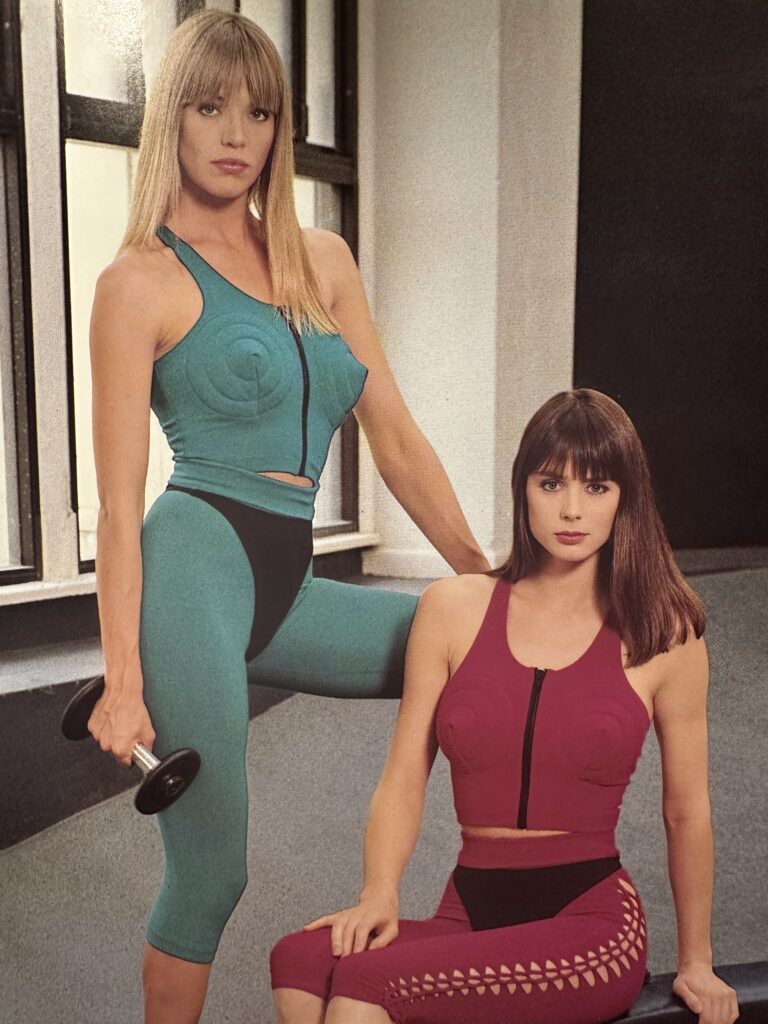
The Conical Bra Original (1988): Two years before the silhouette became a global phenomenon, Carushka engineered the structured, conical bra bodice. While later popularized by mainstream designers for pop icons, archival records from 1988 prove Carushka was the first to merge this aggressive, hyper-sexualized couture with the performance-ready leotard.
- Lycrasuction™ & Supersuction: Carushka pioneered these proprietary sculpting patterns, designed to provide unprecedented support and “body-erasing” smoothing decades before the rise of modern shapewear.
- Activa with DuPont: A direct collaboration with DuPont led to the development of Activa, a high-performance fabric engineered to withstand the most demanding athletic movements without losing its structural integrity.
- The Tencel Revolution: As noted in the California Apparel News (1998), she was a pioneer in sustainable textiles, adopting Tencel long before it became an industry standard for eco-conscious luxury.
- Bust-Boosting Architecture: Her signature “Wonder Halter” and mitered patterns were engineered to visually enhance and support the silhouette, a fusion of garment science and aesthetic flattery that set the brand apart.
Cinematic Zenith & The Celebrity Blueprint:
- The Fonda Blueprint: Jane Fonda’s era-defining workout videos were powered by the Carushka aesthetic; the choice to wear the iconic striped leotard on camera cemented the brand as the gold standard for the global fitness boom.
- The Travolta Partnership: Carushka designed the entire cinematic wardrobe for John Travolta in the film Staying Alive. This partnership led to a $10 million global enterprise and the creation of the Travolta by Carushka signature line.
- Music & Film Royalty: From Cher and Rod Stewart needing tour-ready performance gear to Demi Moore sparking national intrigue on the Howard Stern Show, Carushka was the “Secret Ingredient” for icons who demanded clothing that could handle the intensity of fame.
If a movie in the 80s or 90s featured workout wear, you were looking at the architectural precision of Carushka.
The Art of the Silhouette
Whether she was hand-cutting “Artwear” leotards in her studio or posing for George Hurrell, Carushka remained the “Confidence Queen.” Her true flagship was the intimate connection she built with her customers. Long before the era of social media, she pioneered a model of radical transparency.
While corporate brands hid behind logos, Carushka poured her soul into her catalogs. She humanized her empire by featuring her own customer service team and employees. Consequently, this gave her global audience a “behind-the-scenes” look at the women who actually made their clothes.
This commitment to quality resulted in garments engineered to last for decades—and they really do. As a result of this architectural integrity, dancers still wear original leotards from the 1978 and 1988 collections in ballet studios today. Ultimately, her stores were physical extensions of a brand built on empowerment and uncompromising quality.
A Heart for Recovery
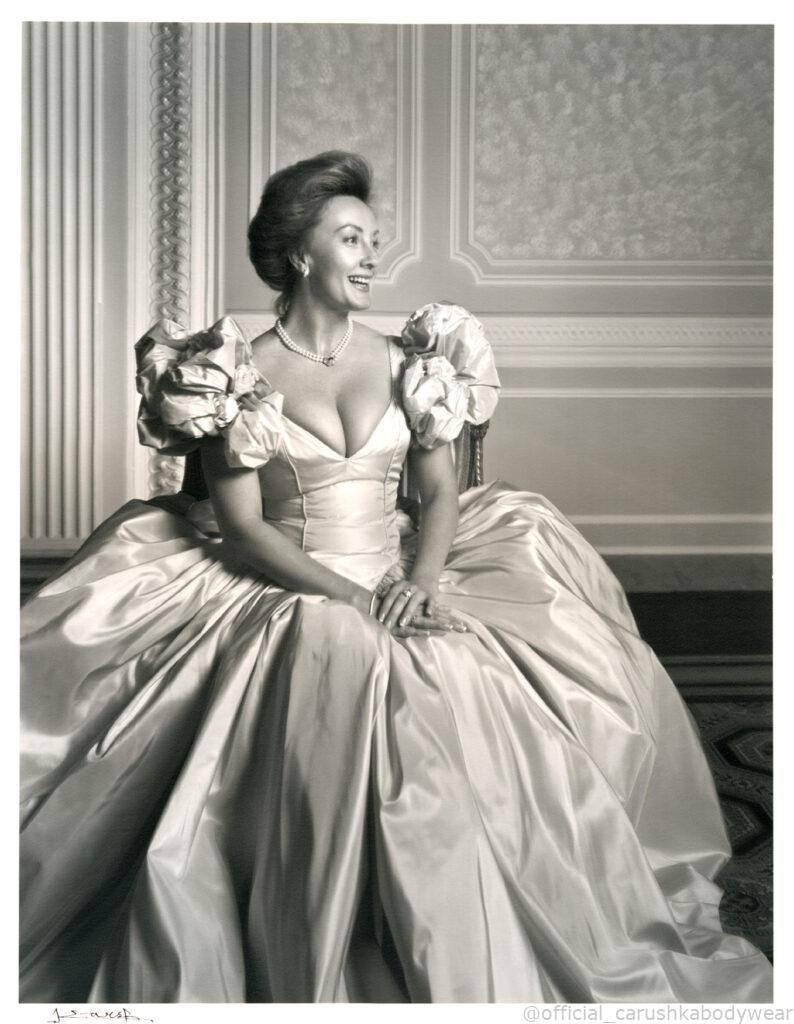
Carushka’s technical brilliance was matched only by her humanitarian heart. Having faced her own battles with addiction, she chose to turn her success into a sanctuary for others, making her final act her most profound. Upon her passing, she donated her entire estate to charity, ensuring that her principles and her spirit of resilience would serve future generations..
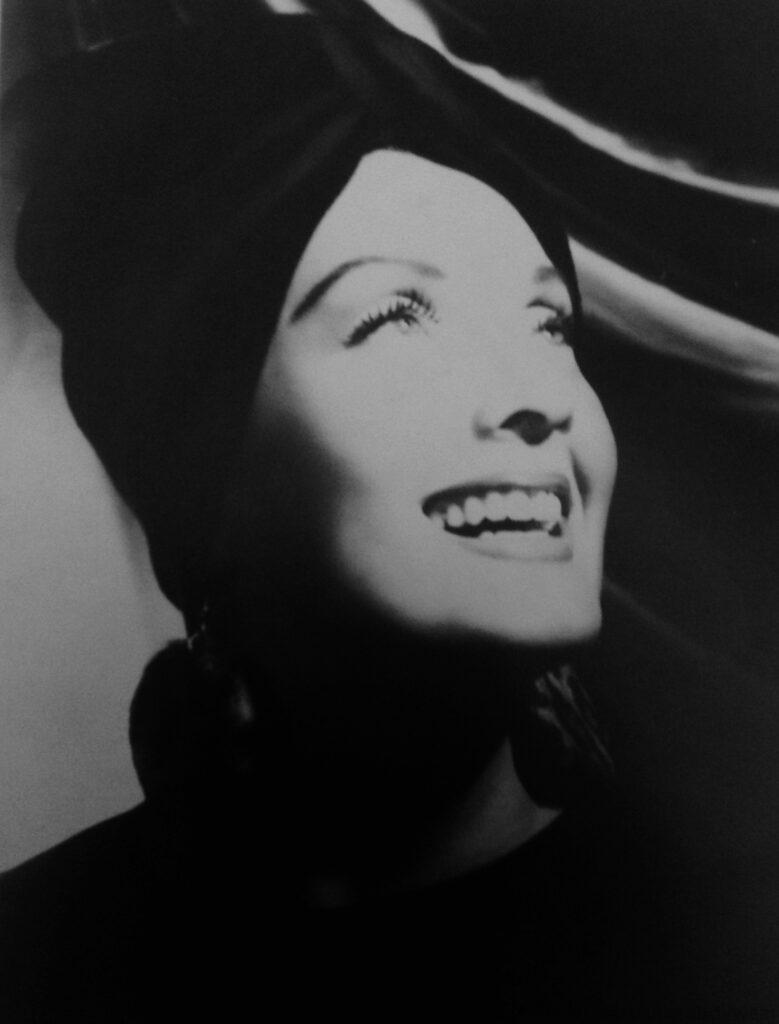
Carushka as captured by legendary portraitist Yousuf Karsh. A study in the joy, elegance and integrity that defined the brands silhouette.
- The Carushka H. Jarecka Center: A $1 million endowment established this recovery center in Pomona, CA, helping women and children find strength in sobriety.
- Design Scholarships: Her estate has provided scholarships for the next generation of visionaries at FIDM and Otis.
- The Mission: As her niece and an experienced recovery professional, I am reclaiming this “Lost History” to honor both her genius as a designer and her commitment to empowering women.
The Guardian: The Carushka Legacy
For me, the Carushka legacy is blood, not just business. My journey began at age 16 in the shipping department. However, Carushka’s mission was to include me in every facet of the design lab. Specifically, she taught me the soulful science of textiles.
In fact, I was there for it all. I worked in the Ventura Boulevard store and appeared in the catalogs. Furthermore, I witnessed history when we launched one of the first fashion websites in 1995. I stayed by her side through every iteration of the company to absorb a lifetime of design wisdom.
The turning point came during my final week at Pepperdine. When I learned of Carushka’s passing, I felt a profound compulsion to carry her legacy forward. Nevertheless, I chose to put the project on hold rather than produce something that didn’t honor her name. Currently, I am constantly let down by modern workout wear. I cannot walk into a store without thinking: “Carushka did it first, and she did it better.” Therefore, I have begun restoring the Original Blueprint because the industry needs this quality again.
Selected Archive & References
- Academic: Contemporary Marketing by Boone & Kurtz (7th–12th Editions). Primary Case Study: Carushka Jarecka.
- Trade Press (WWD): “Carushka Is Still Shipping: Company Resilience,” Women’s Wear Daily (WWD), June 14, 1985 (p. 10).
- Industry Innovation: “Turning to Tencel: 20 Years of Innovation,” California Apparel News, Nov 20, 1998.
- Biographical Profile: “The Architect of Movement,” Daily News, January 28, 1987.
- Cultural Influence: “New Sportswear Exposed: The Thong,” Los Angeles Times, February 23, 1990.
- Documentary: Carushka: Technical Pioneer, PBS Marketing Special.
- National Press: “Competitive Dressing: The Rise of Aerobics Chic,” The New York Times, August 19, 1990.
- National Press: “Workout Clothes: From the Gym…to the Street,” The New York Times Magazine, Sept 28, 1986 (pp. 66–68).
- Cultural Influence: “New Sportswear Exposed: The Thong,” Los Angeles Times, February 23, 1990.
- Editorial Archive: Features and covers in Vogue (July 1994, p. 164), Harper’s Bazaar, and Shape Magazine (1982–2001), featuring cultural icons including Jane Fonda, John Travolta, Gloria Steinem, Kate Moss, Cybill Shepherd, and Lynda Carter.